Navigation tools focused on getting people from A to B as efficiently as possible.
Helping people with limited mobility travel with confidence
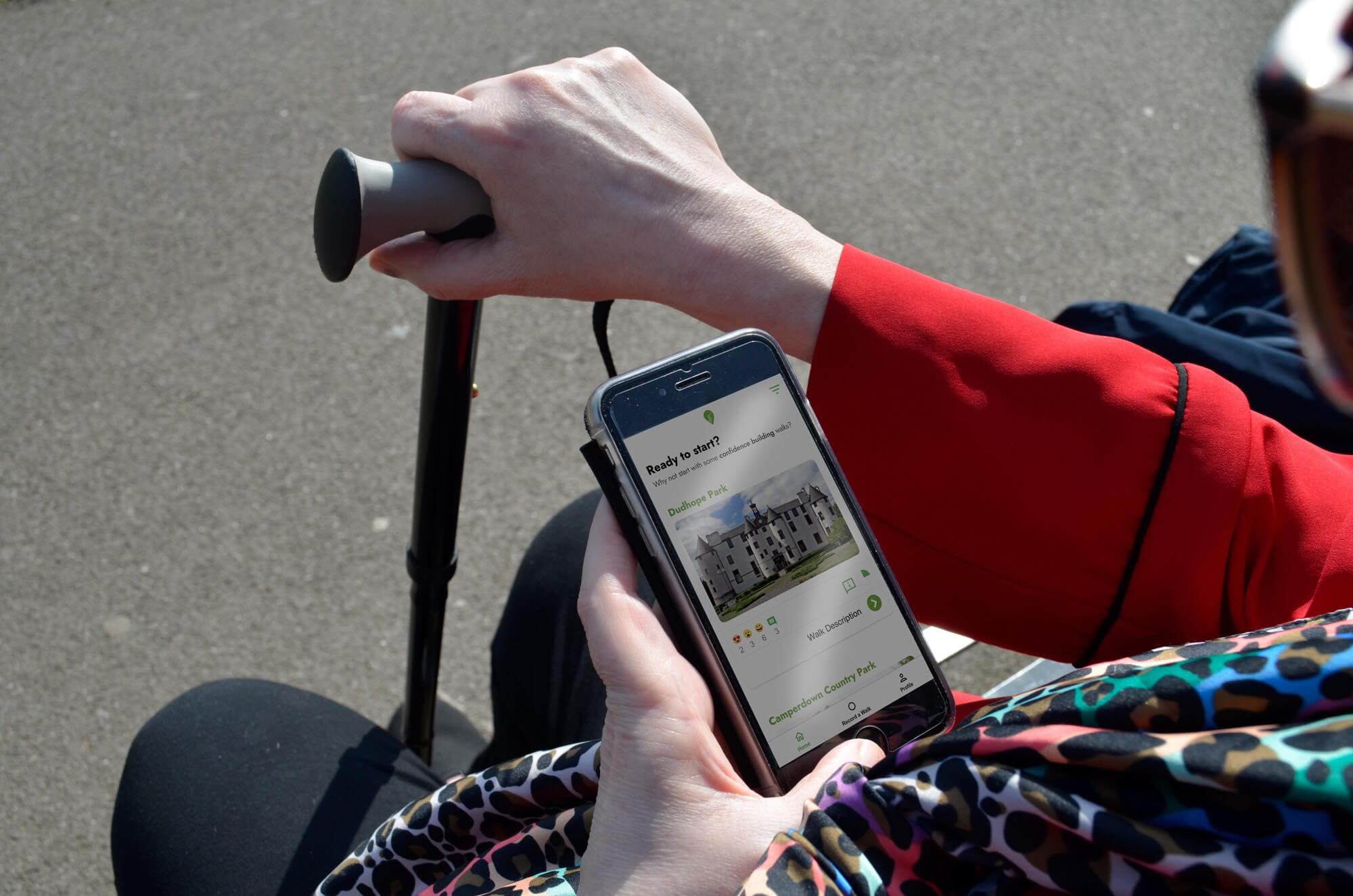
Stride is a concept for accessible navigation and confidence building, developed as an individual honours project.
View the university archive posts that informed this honours project
TL;DR
- Background
- Stride reframed mobility support from route finding alone to confidence building, reassurance, and independence in everyday travel.
- Approach
- Create confidence through reassurance.
- Outcome
- The concept reframed the challenge from navigation alone to reassurance, confidence, and supported independence.
Honours projectPrimary signal
Contextual researchProject evidence
Accessible routesDelivered outcome
01 · Problem
The problem behind the brief.
Navigation products are good at getting people from A to B, but they rarely account for the emotional and physical barriers that shape how someone travels. The harder design challenge was supporting reassurance and independence, not just route choice.
Confidence, fear of falling, busy environments, and small barriers shaped whether journeys felt possible.
Move from fastest route planning to routes that support reassurance, comfort, and independence.
02 · Research
Fear of falling reduced confidence when leaving the house.
What I did
Interviews
Contextual observation
Accompanied walking routes
What changed
Busy roads and noisy environments increased anxiety.
Small obstacles such as kerbs or uneven pavements created major barriers.
03 · Design
Create confidence through reassurance.
Support independence rather than dependency.
Use route planning to reflect comfort and mobility needs, not only speed.
Accessible route planning
Users needed routes that felt manageable, not simply the fastest possible option.
Prioritized quieter streets, dropped kerbs, smoother surfaces, and fewer obstacles.
Local awareness
Confidence dropped when people did not know about barriers before starting a journey.
Explored surfacing roadworks, path closures, and temporary hazards.
Gradual confidence building
Independence grows through smaller successful journeys, not pressure to do more too soon.
Focused the concept on achievable local trips instead of long journeys first.
04 · Outcome
Confidence became the product.
Honours project
Contextual research
Accessible routes
The concept reframed the challenge from navigation alone to reassurance, confidence, and supported independence.
Defined a confidence-first navigation concept for simple local journeys
Identified reassurance and local awareness as core accessibility needs
Explored social walking as a way to support independence, wellbeing, and connection
Stride showed that thoughtful product design could support confidence as much as navigation. The concept focused less on getting somewhere quickly and more on helping people feel capable enough to go at all.
05 · What I learned
Confidence can be a bigger barrier than physical ability.
Accessibility depends on emotional reassurance as well as physical design.
Problem
- Problem
- Many people with limited mobility avoided everyday journeys because uncertainty, anxiety, and environmental barriers made travel feel intimidating.
- Users
- People with limited mobility navigating local journeys and rebuilding confidence in travelling independently.
- Goal
- Help people feel more confident making simple journeys outside their home.
Research
Methods
- Interviews
- Contextual observation
- Accompanied walking routes
Key insights
- Fear of falling reduced confidence when leaving the house.
- Busy roads and noisy environments increased anxiety.
- Small obstacles such as kerbs or uneven pavements created major barriers.
Design
Direction
- Create confidence through reassurance.
- Support independence rather than dependency.
- Use route planning to reflect comfort and mobility needs, not only speed.
Accessible route planning
Users needed routes that felt manageable, not simply the fastest possible option.
- Prioritized quieter streets, dropped kerbs, smoother surfaces, and fewer obstacles.
- Allowed route choice to reflect comfort as well as destination.
Local awareness
Confidence dropped when people did not know about barriers before starting a journey.
- Explored surfacing roadworks, path closures, and temporary hazards.
- Focused on information that reduced uncertainty before leaving home.
Gradual confidence building
Independence grows through smaller successful journeys, not pressure to do more too soon.
- Focused the concept on achievable local trips instead of long journeys first.
- Explored social walking as a way to support confidence and connection.
Key iterations
- Shifted the framing from route finding to confidence building.
- Prioritized comfort, reassurance, and accessibility in route planning.
- Expanded the concept to include local awareness and social support.
Outcome
- Defined a confidence-first navigation concept for simple local journeys
- Identified reassurance and local awareness as core accessibility needs
- Explored social walking as a way to support independence, wellbeing, and connection
What I Learned
- Confidence can be a bigger barrier than physical ability.
- Accessibility depends on emotional reassurance as well as physical design.