AI outputs are starting points, not truth.
Treat AI as something to question, critique and test. Outputs are material for thinking, not answers to accept.
AI has made iteration dramatically cheaper. The scarce resource is no longer ideas, it's clarity. I use AI to make thinking visible earlier, compare directions and give teams something concrete to challenge.
The goal isn't to pull the lever more often. It's to know why I'm pulling it in the first place.
I use AI to explore ideas, compare directions and turn research into better questions. Not “Where are the onboarding problems?” but “Where are people reporting problems getting started?”
AI helps reduce the cost of exploration. The team still owns the judgement, trade-offs and decisions.
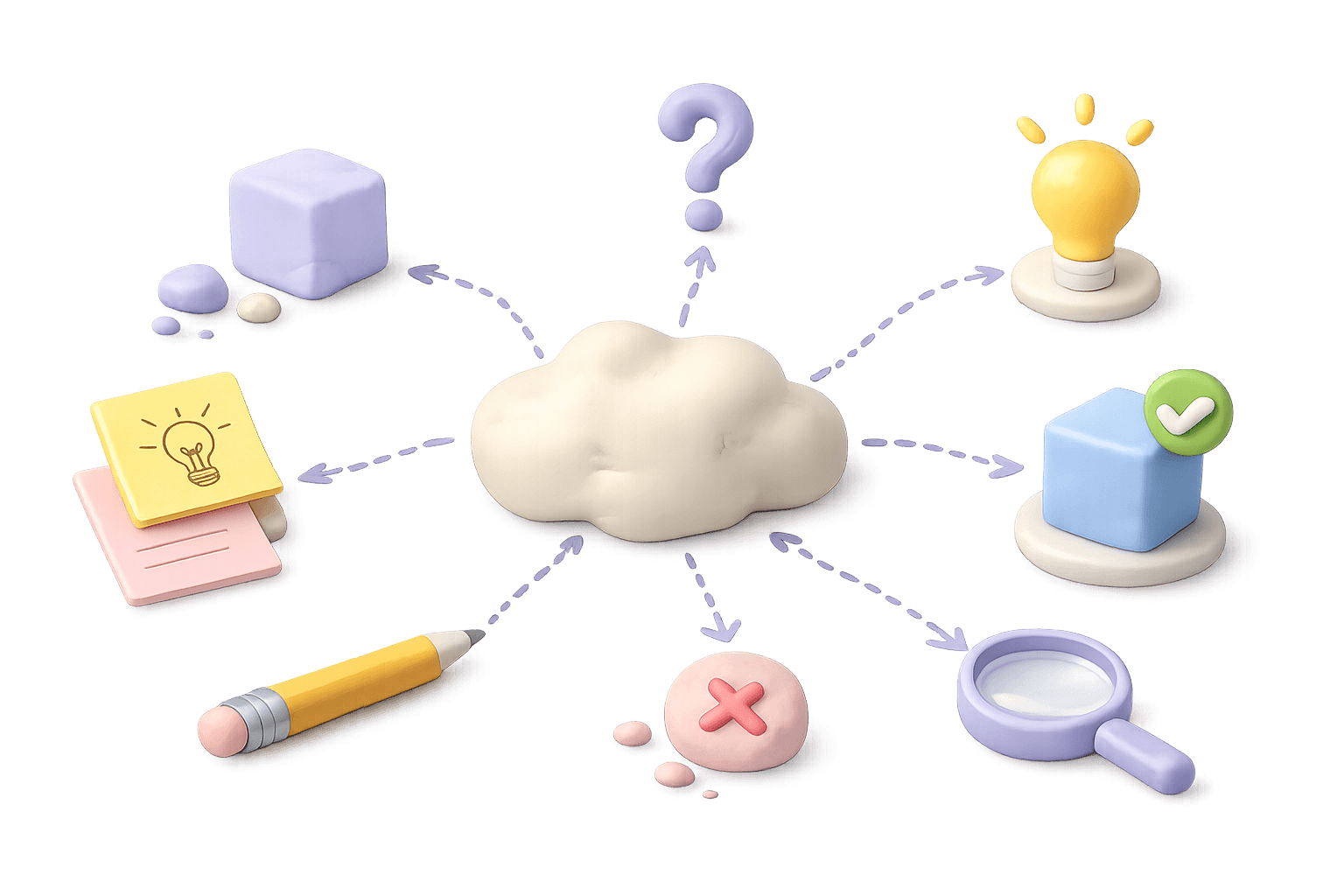
Treat AI as something to question, critique and test. Outputs are material for thinking, not answers to accept.
Don't automate away reflection, ethics, accessibility or product context. Some of the most valuable parts of design come from slowing down and challenging assumptions.
AI supports the work. People remain accountable for the decisions, trade-offs and outcomes.
The philosophy only matters if it changes how work moves. These are the patterns I keep coming back to in product teams.
I use Figma Make, Claude and coded prototypes to get ideas in front of people before committing to a direction.
I use AI-assisted prototypes to explore competing product directions and help teams avoid investing in weaker ideas.
I use Claude Code and Figma-connected workflows to turn design ideas into working prototypes and small production changes, while keeping engineering involved in the decisions.
I use AI to interrogate research, surface assumptions and turn broad prompts into more specific questions we can actually test.