Club information was scattered across Facebook, WhatsApp, spreadsheets, and paper records.
Designing a club management platform for flyball teams
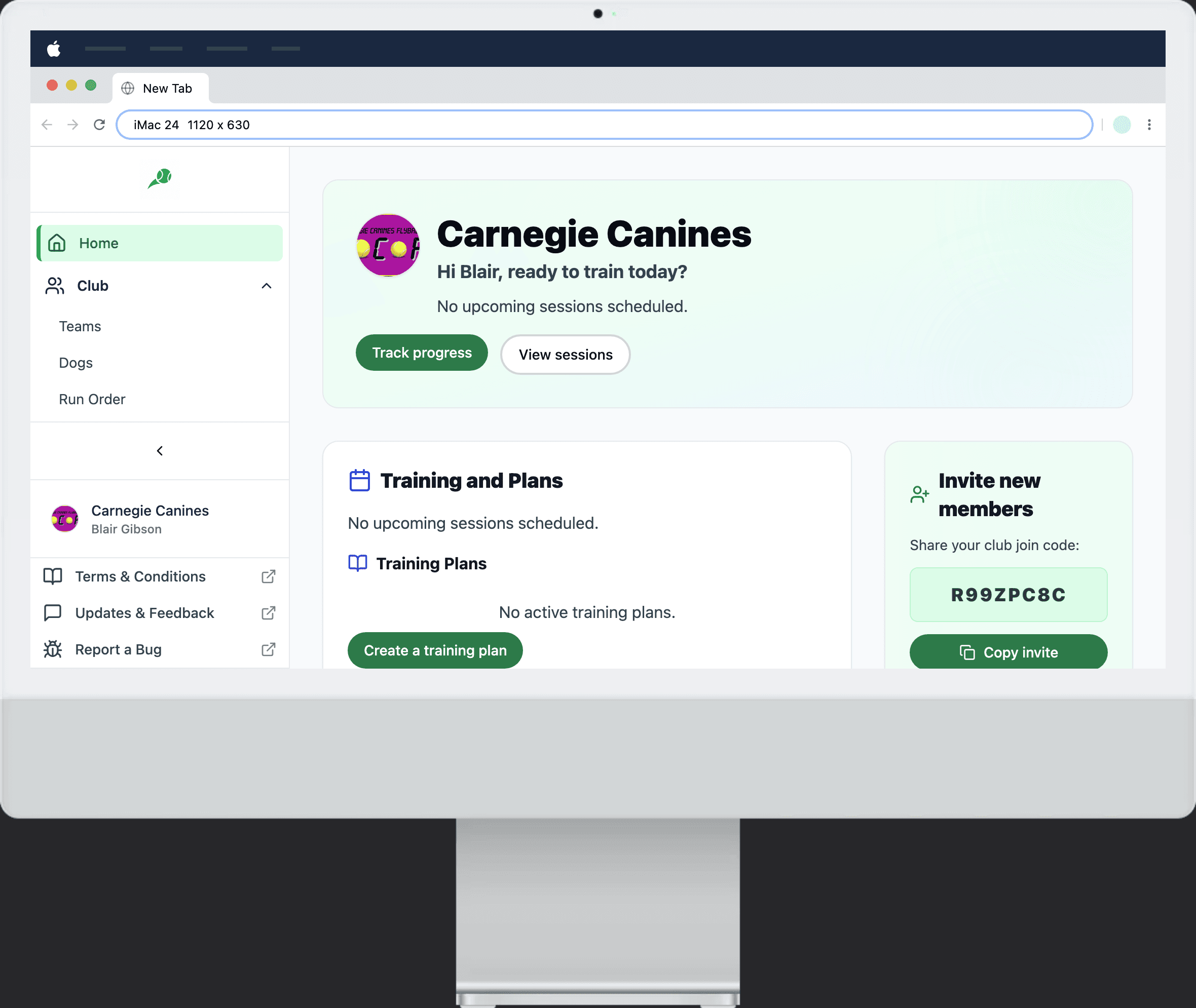
Volpala is a self-initiated sports technology concept for flyball clubs, designed to bring club administration, dog and handler management, training, competitions, and communication into one focused platform.
TL;DR
- Background
- Volpala explored how a club management platform designed specifically around flyball workflows could reduce administration for volunteers and improve communication across clubs.
- Approach
- Reduce administration for volunteer-led clubs.
- Outcome
- Created a complete product concept and validated design direction for a dedicated flyball management platform.
MVP definedPrimary signal
End-to-end conceptProject evidence
Club workflowsDelivered outcome
01 · Problem
The problem behind the brief.
Flyball is a fast-growing dog sport, but the tools clubs rely on to organise training, competitions, and members have not kept pace. As an active competitor and club captain, I saw information spread across social channels, spreadsheets, and paper records, making it harder for volunteers to manage clubs efficiently. The design challenge was not only creating a better interface. It was deciding what a dedicated flyball platform should include first, and what needed to stay out of the MVP so the product did not become too broad before its value was proven.
Generic sports club tools handled membership, but not the specific structure of flyball training and competitions.
Being immersed in the sport made every workflow feel important, which made MVP prioritisation harder.
02 · Research
Clubs relied on several disconnected tools.
What I did
Personal experience as an active flyball competitor and club captain
Conversations with competitors and club organisers
Review of existing sports club management platforms
What changed
Important information was difficult to find.
Competition preparation involved unnecessary manual work.
03 · Design
Reduce administration for volunteer-led clubs.
Keep information in one place.
Design around real flyball workflows rather than generic sports management patterns.
Dog and handler management
Flyball clubs manage both people and dogs, so the product needed to reflect the paired nature of the sport.
Explored dog profiles alongside handler profiles.
Training and competition workflows
Competition preparation and training organisation created repeated admin that generic tools did not support well.
Mapped journeys for training sessions, team rosters, competition entries, and running orders.
Club communication
Important updates were spread across multiple social channels, making it hard for members to know where to look.
Explored announcements and club communication as part of the central platform.
04 · Outcome
A focused product direction.
MVP defined
End-to-end concept
Club workflows
Created a complete product concept and validated design direction for a dedicated flyball management platform.
Designed an end-to-end product concept for flyball club management
Defined a focused MVP around real club workflows
Created a reusable design system for the product concept
Volpala was not launched commercially, but it became an important product design exercise. It showed me that spotting a real problem and designing a strong experience is only part of the work. A successful product also needs demand validation, clear prioritisation, and a small valuable starting point.
05 · What I learned
Volpala fundamentally changed how I think about product design.
Designing a great experience is only part of building a successful product.
Problem
- Problem
- Flyball clubs relied on Facebook groups, WhatsApp chats, spreadsheets, and paper records to manage people, dogs, training, competitions, and club communication.
- Users
- Club captains, team managers, handlers, competitors, and committee members in the flyball community.
- Goal
- Design a platform that simplified club organisation while reducing the administrative burden on volunteers.
Research
Methods
- Personal experience as an active flyball competitor and club captain
- Conversations with competitors and club organisers
- Review of existing sports club management platforms
Key insights
- Clubs relied on several disconnected tools.
- Important information was difficult to find.
- Competition preparation involved unnecessary manual work.
Design
Direction
- Reduce administration for volunteer-led clubs.
- Keep information in one place.
- Design around real flyball workflows rather than generic sports management patterns.
Dog and handler management
Flyball clubs manage both people and dogs, so the product needed to reflect the paired nature of the sport.
- Explored dog profiles alongside handler profiles.
- Designed information architecture around the relationships between dogs, handlers, teams, and club roles.
Training and competition workflows
Competition preparation and training organisation created repeated admin that generic tools did not support well.
- Mapped journeys for training sessions, team rosters, competition entries, and running orders.
- Focused on workflows that reflected how flyball clubs actually prepare and organise teams.
Club communication
Important updates were spread across multiple social channels, making it hard for members to know where to look.
- Explored announcements and club communication as part of the central platform.
- Designed around making important information easier to find later.
Key iterations
- Narrowed the platform around the workflows most specific to flyball.
- Used MVP prioritisation to separate essential club value from nice-to-have expansion.
- Balanced lived experience with conversations and competitor review to avoid designing only for my own club.
Outcome
- Designed an end-to-end product concept for flyball club management
- Defined a focused MVP around real club workflows
- Created a reusable design system for the product concept
What I Learned
- Volpala fundamentally changed how I think about product design.
- Designing a great experience is only part of building a successful product.